Wondering whether Encino south of the Boulevard feels meaningfully different from Encino north of it? In many cases, the answer is yes, especially if you care about lot size, street pattern, housing style, and daily convenience. If you are trying to narrow your home search or understand how buyers may view your property, this comparison will help you see how Ventura Boulevard often shapes the conversation in Encino. Let’s dive in.
Why Ventura Boulevard Matters
In city planning materials, Ventura Boulevard works as the practical dividing line in Encino. South of the Boulevard, residential development is described as large estate-size single-family lots. North of it, the pattern shifts toward a mix of single-family homes and multiple-density housing between Ventura Boulevard and the 101 Freeway.
That does not mean every block fits a simple rule. Encino still has a mix of housing types and neighborhood patterns, so the most useful comparison is often block by block. Still, the north versus south shorthand is a helpful starting point when you want to understand the area quickly.
Terrain Feels Different
North of Ventura Is Flatter
North of Ventura Boulevard, Encino is generally flatter and more grid-like. Streets tend to follow a more regular Valley pattern, with arterial roads and secondary streets that can end in cul-de-sacs.
For many buyers, that translates into a more conventional neighborhood layout. It can feel easier to understand at a glance, especially if you prefer more uniform blocks and simpler navigation.
South of Ventura Turns Foothill
South of Ventura Boulevard, the land rises toward the Santa Monica Mountains. Streets curve with the slope, and the neighborhood form becomes less uniform because hillside topography shapes how roads and lots were laid out.
That change in terrain affects more than appearance. It can also influence privacy, elevation, and the overall feel of a property, which is one reason many buyers draw a strong distinction between the two areas.
Housing Stock Changes Across the Divide
North of Ventura Has More Variety
North of Ventura Boulevard, the housing stock is often described as modest single-family subdivisions on regularly sized lots. This part of Encino also includes some multiple-density housing, including concentrations of 1960s and 1970s courtyard apartment buildings in parts of the north-of-Ventura area, especially west of White Oak and east of Wilbur.
That mix gives the north side a broader range of residential formats. If you are comparing homes here, you may see more variation in immediate surroundings from one pocket to the next.
South of Ventura Skews Larger
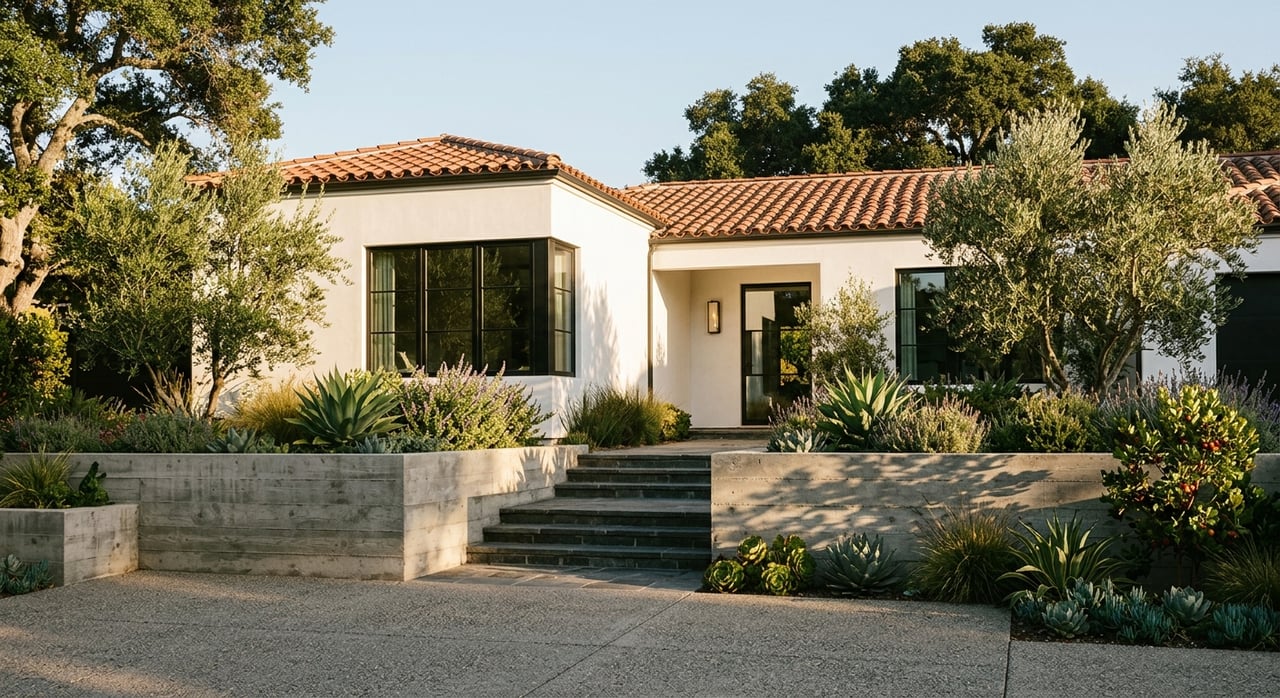
South of Ventura Boulevard, lots are generally more spacious and irregular, and homes are usually larger. The area also includes older 1920s and 1930s estates along with foothill Mid-Century Modern residences in the hill neighborhoods.
For buyers, that often creates a more estate-oriented impression. For sellers, it can mean your home is being compared not just on square footage, but also on lot character, setting, and architectural appeal.
Lot Size and Street Layout
North of Ventura Feels More Uniform
If you value predictability, the north side may feel more straightforward. Regularly sized lots and a flatter street pattern often create a more consistent neighborhood rhythm.
This can appeal to buyers who want a familiar suburban layout. It can also make it easier to compare homes, since lot shapes and street relationships tend to be less irregular.
South of Ventura Offers Irregular Parcels
On the south side, parcel shapes are often less uniform because of the hillside setting. That irregularity can be part of the appeal, especially if you are looking for a property with a more distinct footprint or a setting that feels more removed from the standard Valley grid.
In practical terms, two homes with similar interior square footage can feel very different if one sits on a larger or more uniquely shaped lot. That is why south-of-the-Boulevard comparisons often require a closer look at site layout, not just the house itself.
Convenience and Access Patterns
Ventura Boulevard is Encino’s main commercial spine, and the community plan identifies the 101 Freeway across the northern portion of the plan area and the 405 Freeway along the eastern boundary. Because of that street and freeway relationship, homes north of Ventura often have a more direct connection to the broader Valley grid and Boulevard services.
South-of-Ventura homes, especially in hillside areas, often rely more on local connector streets to reach Ventura Boulevard or the freeways. That does not make one area better than the other. It simply means your day-to-day driving pattern may feel different depending on which side of the Boulevard you choose.
What Buyers Usually Compare
When buyers weigh Encino south of the Boulevard versus north, they are often comparing lifestyle as much as structure. The city survey points to several common distinctions that come up in real-world home searches.
Buyers Often Prefer North for Simplicity
Many buyers who want flatter ground, simpler street access, and a more conventional Valley subdivision feel tend to focus north of Ventura. The housing pattern there may feel more familiar if ease of navigation and a straightforward neighborhood layout are high priorities.
North of Ventura can also appeal to buyers who want to stay closer to the commercial spine and freeway grid. That practical factor can shape search decisions just as much as square footage or finishes.
Buyers Often Prefer South for Privacy
Many buyers who want larger lots, more privacy, elevation, and possible view potential tend to focus south of Ventura. The hillside setting and larger estate-style parcels often create a different experience from the flatter areas to the north.
That preference is especially common among buyers who care about setting and separation between properties. In these comparisons, the land itself becomes a major part of the home’s value story.
Why Block-by-Block Still Matters
The north-south divide is useful, but it is not absolute. Encino’s housing pattern reflects both an earlier rural period and later postwar suburban development, which is why the area includes everything from older estates to ranch-era single-family neighborhoods to apartment pockets.
That means broad labels can only take you so far. If you are buying, the best move is to compare specific streets and blocks. If you are selling, the strongest pricing strategy usually comes from matching your home to the right micro-market rather than relying on a general north or south label alone.
How This Helps Buyers and Sellers
If you are buying in Encino, understanding this divide can help you narrow your search faster. Instead of looking at all of Encino the same way, you can focus on the side of Ventura Boulevard that better matches your priorities for lot size, terrain, street pattern, and home style.
If you are selling, this comparison can sharpen how your home is positioned. Buyers often come in with assumptions about south-of-the-Boulevard versus north-of-the-Boulevard properties, so clear local context matters when presenting value, setting expectations, and identifying the right competing homes.
Encino rewards local knowledge because small differences in terrain, parcel shape, and neighborhood form can change how a home is perceived. If you want help understanding where your property fits or which part of Encino best aligns with your goals, reach out to Steve Shanks for experienced, local guidance.
FAQs
What is the main difference between Encino south of the Boulevard and north of it?
- South of Ventura Boulevard is generally associated with larger estate-size single-family lots, hillside streets, and larger homes, while north of Ventura is more often a mix of single-family homes and multiple-density housing on flatter, more regular blocks.
Are homes south of Ventura Boulevard usually larger in Encino?
- In general, yes. City planning materials describe south-of-Ventura lots as more spacious and irregular, with homes that are generally larger than those found north of Ventura Boulevard.
Is Encino north of Ventura Boulevard flatter?
- Yes. North of Ventura Boulevard is comparatively flatter and follows a more regular Valley grid, while south of Ventura rises toward the Santa Monica Mountains and has more curved streets.
Does Encino north of the Boulevard include apartments?
- Yes. The north-of-Ventura area includes some multiple-density housing, including concentrations of 1960s and 1970s courtyard apartment buildings in certain pockets.
Should you compare Encino homes by north versus south alone?
- No. The north-south shorthand is helpful, but Encino still has a mix of housing types and neighborhood patterns, so the most accurate comparison is often made block by block.