If you picture Calabasas as just one type of luxury market, you may miss what really makes the city stand out. Calabasas offers several distinct ways to live, from estate-style gated enclaves to town-center convenience, hillside privacy, and more varied housing options than many buyers expect. If you are trying to match your lifestyle with the right part of the city, this guide will help you understand what sets Calabasas communities apart. Let’s dive in.
Calabasas Has More Than One Lifestyle
Calabasas covers about 13.3 square miles and sits roughly 22 miles northwest of downtown Los Angeles. The city describes itself as suburban and semi-rural, with rolling hills, canyons, oak woodlands, and protected open space shaping its identity.
That setting helps explain why Calabasas does not feel uniform from one area to the next. The city’s planning framework breaks Calabasas into four broad neighborhood areas: Las Virgenes/Westside, East Village, North Mulholland, and South Mulholland. In real life, that means you are often choosing between different lifestyle experiences, not just different streets.
Estate Communities Offer Privacy And Amenities
For many buyers, the most recognizable Calabasas image is the estate-style community. City HOA records show a long list of named enclaves, including The Oaks of Calabasas, The Estates of the Oaks, Bellagio, Calabasas Park Estates, Calabasas Country Estates, Calabasas Hills, Calabasas Ridge, Vista Pointe, and Westridge.
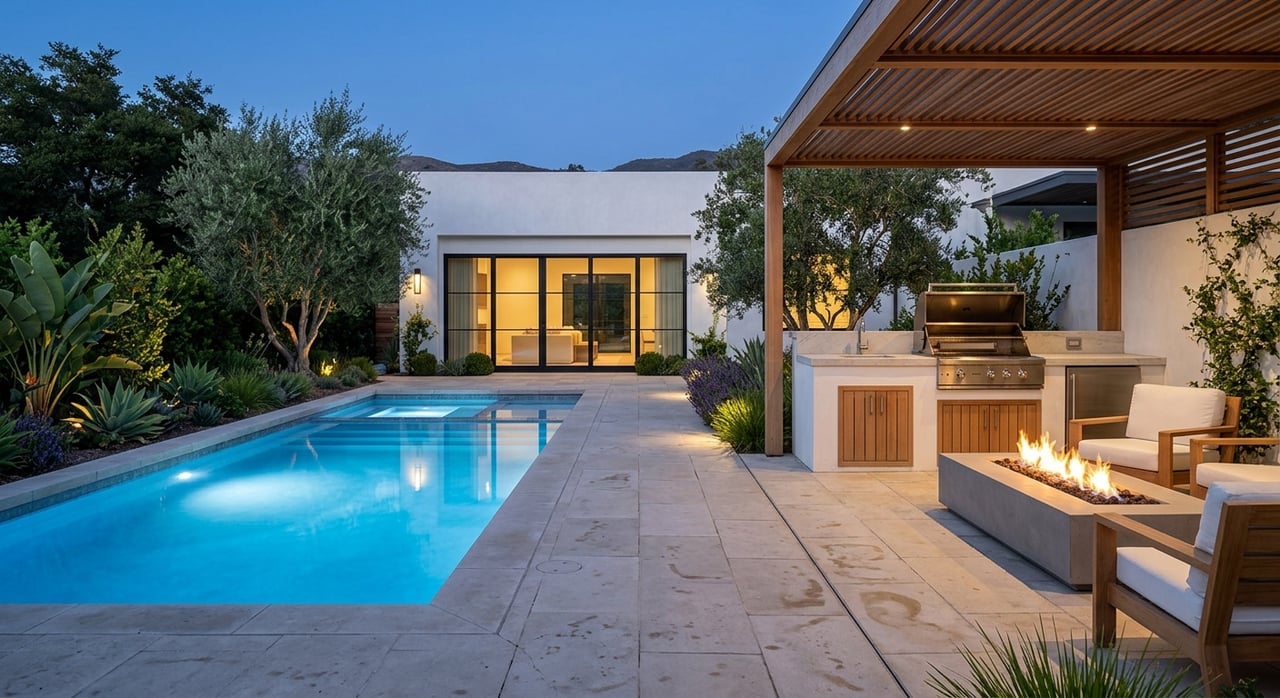
Among these, The Oaks is the clearest example of a master-planned luxury setting. A city report described it as a luxury community at the southern end of Parkway Calabasas, with custom lots and outdoor-oriented design elements such as pools, patios, gazebos, outdoor fireplaces, and barbecue areas.
What sets these communities apart is the blend of privacy, structure, and lifestyle amenities. In a market like Calabasas, many buyers are not only looking for square footage. They are also looking for a more defined setting, a sense of separation from surrounding traffic, and community features that support daily life at home.
For sellers, these neighborhoods often appeal to buyers who value presentation and overall setting as much as the home itself. That makes community identity an important part of how a property is positioned in the market.
East Village Feels More Connected
If you want a more central and convenience-oriented experience, East Village stands out. The city identifies East Village as a collection of four distinct areas: Calabasas Park, Old Town Calabasas, The Commons, and Craftsman’s Corner.
This part of Calabasas feels different because it functions as a civic and social hub. Old Town preserves a historic retail downtown around the Leonis Adobe, while The Commons has become the area’s de facto town square since opening in 1998.
The Commons is a major retail, dining, and entertainment center with about 215,000 square feet, 22 retailers, and 13 restaurants. That concentration of shopping and dining helps make this area especially appealing if you want easier access to errands, meals out, and local activity.
Calabasas Park also carries an established identity. City HOA records label Calabasas Park HOA as Classic Calabasas, which reflects its long-standing place in the city’s East Village character.
Old Town And The Commons Create A Town-Center Feel
One of the biggest differences in Calabasas is whether you want a town-core environment or a more tucked-away residential setting. Old Town and The Commons create the strongest town-center feel in the city.
That matters because lifestyle is not only about the house. It is also about what feels easy on a regular Tuesday. If you enjoy being closer to shopping, dining, and community gathering spots, East Village often delivers a more connected experience than the hillside sections of Calabasas.
The Calabasas Lake Greenbelt adds to that social identity. The city hosts its summer concert series there, and public access to the private lake is limited to city-sponsored concerts. That gives the area a distinct civic feel and reinforces its role as a gathering place.
Hillside Neighborhoods Prioritize Privacy
North Mulholland and South Mulholland offer a different version of Calabasas. According to the city, North Mulholland includes areas such as Mulwood and Park Moderne and is largely suburban, low-density, and made up of several physically disconnected neighborhoods.
South Mulholland includes Calabasas Highlands and Old Topanga Canyon. The city describes this area as having a country feeling, hilly terrain, narrow roads, abundant undeveloped land, minimal infrastructure, and an eclectic mix of newer large homes and older low-density subdivisions.
These neighborhoods tend to attract buyers who want privacy, topography, and direct access to open space more than walkable convenience. The tradeoff is practical. You may give up some immediate access to retail and dining, but gain views, separation, and a stronger connection to the natural landscape.
City maps and HOA records also reflect how many hillside and edge-of-city enclaves are commonly recognized, including Mulholland Heights, Mountain Park, Cold Creek, Greater Mulwood, and Calabasas Highlands. Together, they show how much of Calabasas identity is tied to terrain and open land.
Open Space Is A Big Part Of Daily Life
What truly sets Calabasas apart from many nearby markets is how strongly open space shapes the city. The city identifies open space as a key part of its character and reports that it achieved an earlier 3,000-acre open-space goal before establishing a new goal of 4,000 acres.
This is not just a planning idea on paper. It affects how many parts of Calabasas look and feel, especially in neighborhoods near trails, canyons, and hillside edges.
The city’s Trails Master Plan is designed to create a continuous system for pedestrians, equestrians, and bicyclists that links open spaces, public facilities, and nearby regional parks. For many residents, that means outdoor access is part of everyday living, not just a weekend bonus.
Parks And Recreation Add Everyday Value
Calabasas also offers a strong mix of parks and civic amenities. The city’s parks and facilities include Bark Park, Grape Arbor Park, Gates Canyon Park, Highlands Park, Juan Bautista de Anza Park, Wild Walnut Park, Creekside Park, the Calabasas Community Center, the Calabasas Senior Center, and the Calabasas Tennis & Swim Center.
De Anza Park includes a trailhead to the Las Virgenes Trail and a renovated multi-use sport court. Wild Walnut adds open space, a walking and hiking trail, and separate dog parks.
The Community Center includes a gymnasium, fitness studio, meeting rooms, a banquet hall, and sports and enrichment programming. These amenities support a lifestyle that feels active and community-oriented across more than one age group or housing type.
Outdoor recreation extends beyond city facilities too. Malibu Creek State Park, located about four miles south of Highway 101 on Las Virgenes/Malibu Canyon Road, offers hiking, fishing, bird-watching, mountain biking, horseback riding, rock climbing, swimming, and camping.
King Gillette Ranch in Calabasas adds another layer to that outdoor identity. Visit Calabasas highlights it as a 588-acre historic park with scenic views and a 1928 mansion built for King C. Gillette.
Calabasas Has More Housing Variety Than Many Expect
A common misconception is that Calabasas is only about large gated homes. In reality, the city’s housing mix is broader than that.
In 2020, Calabasas had 9,200 housing units. More than three-quarters were single-family homes, nearly one-quarter were multifamily apartments or condominiums, and the remainder were in Calabasas Village Mobile Estates.
The city’s housing page lists apartments and other housing options such as Malibu Canyon Apartments, Malibu Creek Apartments, Avalon Apartments, Canyon Creek Senior Affordable Housing Community, Horizons at Calabasas 55+, and Paxton Calabasas. Calabasas Village Mobile Estates includes 211 mobile-home spaces, and the city maintains a distinct land-use designation to preserve that housing form.
This matters for buyers because it means there is more than one entry point into the Calabasas market. It also matters for sellers because different pockets of the city appeal to different buyer needs, budgets, and lifestyle priorities.
How To Think About Calabasas Communities
If you are comparing Calabasas neighborhoods, it helps to focus on how you want to live day to day. In broad terms, the city’s communities tend to sort into a few lifestyle patterns.
- Estate and HOA enclaves often appeal to buyers who want privacy, controlled community settings, and a more polished residential feel.
- East Village and town-core areas often work best for buyers who value easier access to shopping, dining, and civic gathering places.
- Hillside and edge-of-city neighborhoods usually suit buyers who prioritize terrain, views, and open-space access over convenience.
- Apartments, condos, senior housing, and mobile-home options show that Calabasas includes a wider range of housing choices than the city’s luxury reputation alone suggests.
The right fit depends on your priorities. Some buyers want a strong community identity and nearby amenities, while others want more separation and a quieter setting.
For sellers, understanding that distinction is just as important. The most effective marketing is not only about features and finishes. It is also about matching your home to the lifestyle story buyers are actually shopping for.
If you are thinking about buying or selling in Calabasas, working with someone who understands these micro-markets can make the process much clearer. Steve Shanks offers calm, local guidance, premium marketing, and personal service to help you navigate the Calabasas market with confidence.
FAQs
Which Calabasas area is closest to shopping and dining?
- East Village, including Old Town Calabasas and The Commons, is the city’s most shopping- and dining-oriented area.
Which Calabasas communities feel the most private?
- Estate-style enclaves such as The Oaks and many hillside neighborhoods in North Mulholland and South Mulholland generally offer a more private setting.
Is Calabasas only made up of large single-family homes?
- No. Calabasas also includes apartments, condominiums, senior housing, and Calabasas Village Mobile Estates.
What gives Calabasas its outdoor lifestyle appeal?
- The city’s protected open space, trail planning, local parks, and access to places like Malibu Creek State Park and King Gillette Ranch all contribute to its outdoor-focused character.
How are Calabasas neighborhoods different from each other?
- The main differences usually come down to lifestyle, including privacy, access to amenities, terrain, community feel, and proximity to open space.