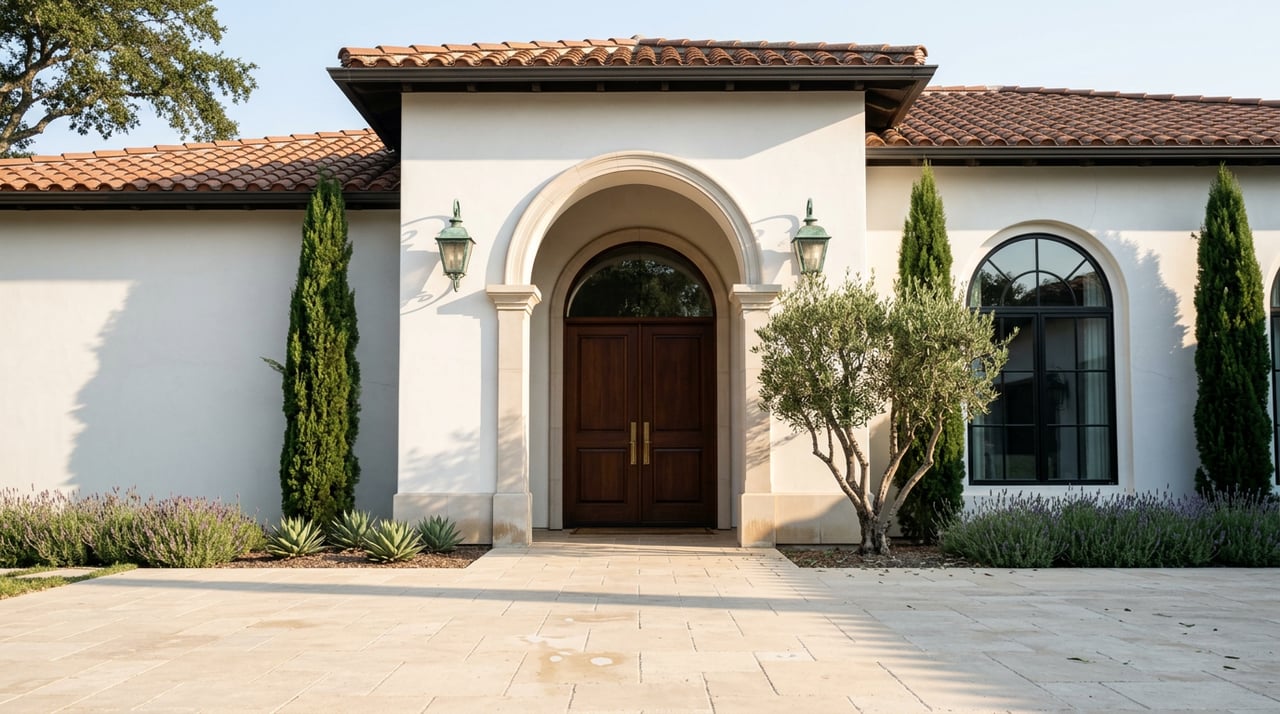
Two homes come on the market in Calabasas at $1.8 million. Same square footage, same year built, same finishes. A buyer comparing them side by side with a mortgage calculator will land on nearly identical monthly numbers. Then the preliminary title report shows up, or the HOA resale package lands in an inbox three days before closing, and the two houses stop looking anywhere near the same.
Local closings show a consistent pattern behind financing surprises that surface after an offer is accepted: a large share trace back to HOA fees or insurance costs that never made it into the buyer's original budget. Not the mortgage rate. Not the down payment. A line item that lives outside the loan estimate entirely and only shows up once escrow is underway.
That gap is the actual story in Calabasas right now, more than the median price itself.
The Same Price Tag, Three Different Monthly Numbers
Calabasas is not one housing market. It is a set of adjacent, differently governed neighborhoods that happen to share a ZIP code, and the governance structure changes the monthly math more than most buyers expect.
The Oaks of Calabasas, one of the city's best known guard-gated enclaves, carries HOA dues that typically run $450 to $650 a month. That fee funds a 24-hour double-gated entrance and a private community park with a clubhouse, pool, tennis courts, and a jogging trail.
Calabasas Park Estates, an established 427-unit community built in 1991 along Calabasas Lake near the Calabasas Country Club, runs lower: roughly $250 to $350 a month. That covers gated entry, security patrols, and common-area landscaping, without the private recreation complex The Oaks maintains.
Greater Mulwood, a neighborhood near Chaparral Elementary and Alice C. Stelle Middle School, reads as equally established on a map. Its residents' association asks for $25 a year, voluntarily, to fund things like a graffiti-removal hotline and advocacy with the city over traffic and school scheduling.
None of that difference shows up in a listing photo. All of it shows up in the monthly cost of owning the home.
What the Fee Is Actually Paying For
The higher the dues, the more governance and infrastructure sit behind the gate. That is not a criticism of either model. It is a difference buyers should be pricing in before they fall for a floor plan.
In The Oaks, the fee is buying staffed security, a maintained clubhouse and pool complex, and a level of architectural review that keeps the streetscape consistent. In Calabasas Park Estates, the fee buys a lighter version of the same thing: gated access and shared landscaping, without the recreation campus. In Mulwood, there is no gate or clubhouse. The $25 a year is closer to a neighborhood watch subscription than a governing body.
A buyer who wants the private amenities and controlled entry of The Oaks is choosing to pay for them every month, indefinitely, for as long as they own the home. A buyer who values a lower fixed cost gets that in a neighborhood like Mulwood. Neither choice is wrong. But comparing a Mulwood listing to an Oaks listing on price per square foot alone hides the fact that their association costs differ.
The Tax Line Most Buyers Never Scroll Down For
HOA dues aren't the only carrying cost that varies by neighborhood in Calabasas. Some newer developments in the area also carry Mello-Roos, a special tax tied to a Community Facilities District that repays bonds issued to fund infrastructure like roads, sewers, and schools. It is not an HOA fee, and it does not work like one.
Mello-Roos rides on the county property tax bill as its own line item, separate from the base 1 percent rate set under Proposition 13, and it is not calculated as a percentage of the home's value. Instead, JVM Lending explains that each district sets its own formula, usually based on square footage or lot size, which means two homes worth the same amount can carry very different Mello-Roos charges depending on which district they sit in. Statewide, these special taxes commonly run $1,200 to $6,000 a year, though newer high-cost developments can push past $10,000. The number itself often takes a little digging to confirm for a specific address.
Before writing an offer on a Calabasas property, it is worth checking:
- The current property tax bill for a separate line labeled Community Facilities District, Special Tax, or a CFD name
- The preliminary title report, where special tax liens are listed in the tax status section
- The HOA resale package or CC&Rs, if the property sits inside an association, which sometimes reference overlapping district assessments
- Whether the tax is on track to expire soon or has decades left on its bond schedule, since Mello-Roos ends only when the underlying bonds are paid off
Some Calabasas neighborhoods carry it. Others don't. The only reliable answer is a parcel-specific one, confirmed before the financing contingency comes off.
Why the Reserve Study Matters More Than the Poolside Photos
Even inside a single HOA, the fee itself doesn't tell the whole story. What matters just as much is how well the association has funded its reserves for the repairs every gated community eventually needs.
The Oaks offers an example of why reserve funding matters. Brian Cameron, who was the first resident of The Oaks and later served eighteen years on its board, recalled coming back onto the board in the year after the transition from developer control and finding the community's reserve fund had collapsed. "Our reserves had dropped $400,000 in 2006 to just $40,000 at the end of 2007," according to a Reserve Study case study. The association later rebuilt its finances with an outside reserve study and a more disciplined funding plan.
Its current general manager credits regular reserve studies with keeping the board's decisions transparent to homeowners today. But the episode is a reminder that a healthy-looking clubhouse and a well-maintained gate don't guarantee a fully funded reserve account behind them. A buyer comparing two HOA communities in Calabasas should ask for the association's most recent reserve study and budget before removing a financing contingency, the same way they'd ask for a home inspection.
What This Means When You're Comparing Two Listings
Put the pieces together and the Calabasas market looks less like one price curve and more like several overlapping ones. Citywide, homes sold for a median of $1.8 million over the three months ending in May 2026, down 6.3 percent from the same period a year earlier, at a median of $618 per square foot. But that citywide number flattens real differences between pockets of the city. Over roughly the same window, Downtown Calabasas sold at a median of $1.46 million and $772 per square foot, up from the year before, while Calabasas Hills sold at a median of $1.8 million, up 10.1 percent year over year.
Some of that spread comes down to lot size, age, and finish level, the things a listing photo actually shows. But part of it also reflects what sits underneath the price: whether the home carries a $500 monthly HOA fee funding a private clubhouse, a $25 annual civic due with no gate at all, or a Mello-Roos assessment that adds a few hundred dollars a month regardless of how the market moves. Two buyers with the same budget can face very different monthly costs beyond the mortgage payment implied by the sale price.
The smartest way to compare two Calabasas listings isn't to stop at price per square foot. It's to build out the full monthly number for each, HOA dues, any Mello-Roos line, insurance, and the mortgage payment together, and compare that total before deciding which house is actually the better value.
If you're weighing a move into one of Calabasas's gated communities or trying to figure out what a specific address actually costs to carry month to month, Steve Shanks can walk through the HOA documents, tax bill, and reserve study for any property you're considering before you write an offer. Request a free home valuation to start the conversation.
This article is general information, not legal, tax or financial advice. Consult a qualified professional about your situation.