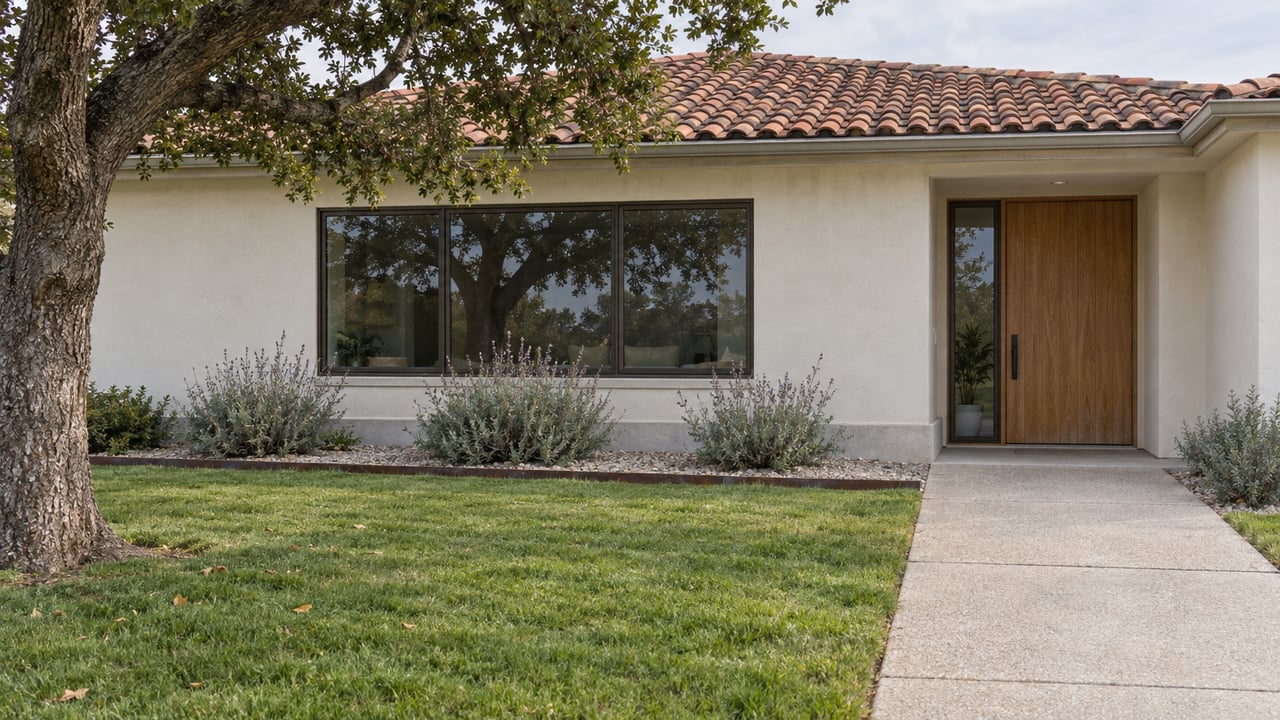
Picture two Calabasas households that use exactly the same amount of water in a month, 15 billing units, and stay inside their water budgets. One lives low on the district's system. The other lives where water has to be pumped above 1,700 feet before it reaches the tap. Under Las Virgenes Municipal Water District's 2026 rates, the first household pays $127.19 before sanitation charges. The second pays $178.04. They used the same water, and the higher bill reflects nothing about their habits.
That $50.85 a month comes from where the house sits. Almost everything else on a Calabasas water bill also traces back to the property, and to two numbers the district keeps on file for it. The listing shows none of this.
The Elevation Line Is Priced by the Pump
The City of Calabasas is inside LVMWD's service area, and that same plan says the Metropolitan Water District of Southern California supplied 97.6 percent of the district's imported water over the past decade. Getting that imported water uphill costs pumping power and infrastructure. LVMWD bills that cost through an elevation charge, applied to every unit you use. Your zone depends on the highest point the water is pumped to before it reaches the home.
One billing unit, or HCF, is 748 gallons. Here is what each zone adds per unit, from the district's 2025 rate study and its current rates page:
| Zone | Pumped to | 2025 | 2026 | Scheduled 2030 |
|---|---|---|---|---|
| Zone 1 | No pumping above 1,235 ft | $0.00 | $0.00 | $0.00 |
| Zone 2 | 1,235 to 1,700 ft | $0.59 | $0.42 | $0.50 |
| Zone 3 | 1,700 to 2,200 ft | $1.36 | $3.39 | $3.84 |
| Zone 4 | Above 2,200 ft | $2.20 | $3.46 | $3.92 |
The 2026 reset moved these charges in opposite directions. Zone 2 got cheaper. Zone 3 roughly two and a half times what it was in 2025. For the 15-unit household above, the Zone 3 line went from $20.40 a month to $50.85. The district says most of its customers are in Zones 1 and 2, so the steepest charges fall on a smaller group of higher-elevation homes.
A home's zone doesn't change when it sells, and conserving water won't change it either. LVMWD publishes a billing zones map. According to the district's guide to reading your bill, bills list elevation charges separately when they apply, so a seller's recent bills will show which charge the home carries.
The Budget on File Came From an Aerial Photo
Zone sets one part of the bill. The tier price on each unit comes from a customized water budget, and the budget is built from facts about the property and household that the district already holds. LVMWD's water budget page lists three inputs:
- Resident count. Each resident adds about 1.9 HCF, roughly 1,400 gallons, to the monthly indoor budget. Sanitation charges also rise with each added resident.
- Irrigated area. The district estimates how much of the lot regularly gets watered using aerial imagery and property information. Pools count.
- Weather. Outdoor budgets rise in longer, hotter months and shrink in cooler ones, following evapotranspiration, or ETo.
The first two inputs are where a sale creates friction. The numbers on file describe the property as the district last recorded it. New owners might have a different number of residents than the seller did. They might replace turf, add planting beds or put in a pool. Until the district's records match, the household's budget reflects someone else's facts, and any use beyond that budget is billed at the higher tiers.
Owners can change this through LVMWD's budget adjustment request. The form covers changes in permanent residents, medical needs, livestock, licensed care facilities and changes to irrigated area. Some requests need supporting documents. Irrigated-area changes need a drawing or sketch with dimensions and square footage, and medical requests need a physician's note. The form also says approved adjustments take effect on the date the district receives the request. Bills issued before that date stay on the old numbers.
2026 Shifted Money to the Parts You Can't Conserve Away
The budget sets how many units are billed at each tier price. The 2026 restructuring changed how much those tier prices matter compared with everything else on the bill.
According to the rate study, LVMWD now recovers 100 percent of the fixed costs Metropolitan bills it through the monthly readiness-to-serve charge. That raised the district's fixed revenue recovery to about 36 percent. For a standard ¾-inch household meter, that charge went from $43.61 a month in 2025 to $58.79 in 2026, an increase of about 35 percent. The household pays it before using a single gallon.
The price of efficient water went down. In 2025, use within budget was priced in two tiers, $4.76 for indoor and $5.69 for outdoor. In 2026 the two merged into a single Efficient tier at $4.56. The Inefficient tier rose to $7.68 and the Excessive tier to $9.05.
So under the 2026 structure, a household inside its budget gets cheaper water but pays a larger fixed charge. A household over its budget pays more on both. A household in a high zone pays the larger elevation charge on every unit. Here is the opening example again, with the parts separated:
| 15 HCF a month, all within budget, ¾" meter | Zone 1 | Zone 3 |
|---|---|---|
| Readiness-to-serve | $58.79 | $58.79 |
| Efficient tier, 15 × $4.56 | $68.40 | $68.40 |
| Elevation, 15 × zone rate | $0.00 | $50.85 |
| Monthly water total | $127.19 | $178.04 |
In the Zone 3 column, about 61 percent of the bill is the fixed charge plus the elevation charge. Using less water reduces only the middle line.
What Is Scheduled, and What Is Still Open
LVMWD adopted a five-year rate schedule through the Proposition 218 process in 2025. Its rates page notes that the board has to reaffirm each following year's adjustment. The 2026 rates now in effect match the rate study's proposed figures exactly, so the later years in that table are the plan of record. Here are the scheduled amounts for a standard household:
- January 1, 2027: readiness-to-serve $60.23; tiers $4.70, $7.92 and $9.33; Zone 3 elevation $3.50 and Zone 4 $3.57.
- January 1, 2030: readiness-to-serve $64.83; tiers $5.15, $8.67 and $10.20; Zone 3 elevation $3.84 and Zone 4 $3.92.
Two factors could move the 2027 numbers. The first is that annual reaffirmation, which had not appeared on a board agenda as of the district's October 20 meeting. The second is wholesale cost. The rate study says the scheduled rates do not include potential pass-through costs from Metropolitan starting January 1, 2027. In April 2026, Metropolitan's board adopted a budget with an overall 6.2 percent rate increase to its member agencies on January 1, 2027, and another 6.2 percent on January 1, 2028.
Further out is the Pure Water Project Las Virgenes-Triunfo, a local supply project now under construction in Agoura Hills. On September 18, 2026, LVMWD announced that the roughly $466 million project had secured more than $335 million in state and federal financing. That includes an $84 million State Water Board package and a $251 million EPA WIFIA loan. The district expects the state package alone to save customers about $10 a month compared with market-rate financing. The timeline differs between sources. That release targets operation by 2030, while the project's construction page anticipates completion in 2029.
The rate study ties a new charge to the project's completion. Once Pure Water is finished, a Pure Water Supply Charge applies only to Tier 2 and Tier 3 use. It is scheduled at $0.64 and $1.14 per HCF in 2029, and $0.73 and $1.28 in 2030. Tier 1 stays at $0.00. Under the plan, households over their budgets pay the per-unit cost of the new local supply, which makes an accurate resident count and irrigated area on file worth more over time.
Questions to Settle Before Closing
The factors above all come from the property, so they can be checked during escrow:
- Which elevation zone appears on the seller's recent bills, and does it match the district's billing zones map?
- What resident count and irrigated area does the account carry, and how do they compare with the incoming household and any planned yard work?
- Is there a pool, and is it reflected in the irrigated area on file?
- Do the seller's summer bills show use billed in the Inefficient or Excessive tiers, and does that reflect the household or a budget set from older data?
Quick Answers
Does the elevation charge apply to all water used, or only usage above budget? It applies per unit of water used, at the rate for the home's zone, whatever tier the unit falls in.
Are the 2027 rates final? They are the scheduled step in the five-year plan adopted in 2025. The board must still reaffirm them, and the scheduled figures do not include possible pass-through of Metropolitan's 2027 increase.
Do more residents also raise the sewer side of the bill? Yes. The district says sanitation charges increase with additional residents, even as each resident also adds about 1.9 HCF to the indoor water budget.
This post is general information about how a public utility prices its service. It is not legal or financial advice, so confirm your own account details with LVMWD and the right professionals before relying on them.
At Steve Shanks, we treat a Calabasas home's water costs as part of what you're buying, alongside the HOA dues and tax lines. When we represent a buyer, those questions go on the list for escrow. When we list a home, we help sellers gather the bills buyers will ask to see. If you're weighing a Calabasas purchase or sale, request a free home valuation and we'll walk through the full monthly picture with you.